Diamond Lighting LED LightsWhy use LED?
Advance LED technology is now widely visible in malls, on the road, on cars, even your T.V. There are many advantages for using LED; it consumes less power and long lasting. In these harsh economic times, everybody is trying to spend less and save more. The initial cost for LED lighting parts is more expensive but in the long run you are better off. LED technology is use both in commercial and residential sectors. For residential usage, it can be use to decorate and accent a room. Installing LED strip lights on kitchen cabinets is also a new trend. It has a both practical and aesthetic purpose. There is wide commercial usage of LED technology. In the past 50 years, neon lights were the primary choice for store front signs nowadays there are LED signs everywhere. 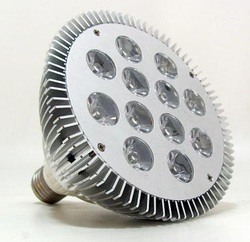 |
 Definition of LED Color Temperature
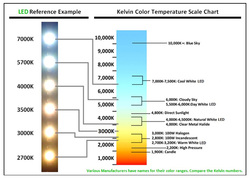
LED color temperature measures the color of an LED light bulb. It defines the amount of pure white, yellow, red and blue in a light. Another way to think of the color temperature is how 'warm' or 'cool' is the white LED light bulb. Color temperature is measured in degrees Kelvin and is a measure of the part of the color spectrum that is found in light. A simple way to think about this is to compare the light from the sun from sunrise to sunset. At noon the light is bright and white, even more so nearer the equator. At sunrise and sunset the light takes on a more yellow or even red tint. Lower color temperatures will have more yellow, and higher color temperatures will go from yellow, to pure white and eventually to bluish, like you might find on some of the blue tinted headlights on new model cars. |
Comparison between LEDs, CFLs and Incandescent light bulbs
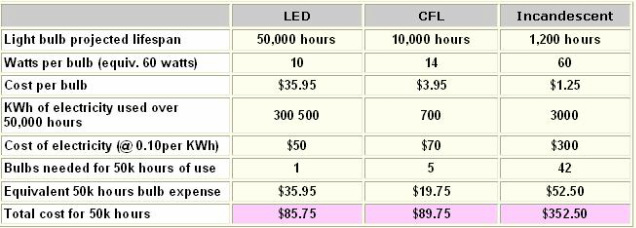
*Cost of electricity will vary. The figures used above are for comparison only, and are not exact. Residential energy costs among the various states range from 28.53 cents (Hawaii) to 6.34 cents (Idaho) per KWH.
*The cost per bulb for LEDs may vary. We used the figure of $35.95 (for a 60 watt equivalent LED bulb) as an average among lighting retailers.
*Estimates of bulb lifespan are projected, since it would take about 6 years of continuous lighting to test. Some manufacturers claim the new LED bulbs will last up to 25 years under normal household use, but this is not proven.
*Bulb breakage and bulb replacement costs have not been factored into this comparison chart. Incandescent bulbs and CFL bulbs are more easily broken than LEDs, which increases their cost of use.
* Most LEDs come with a minimum 2-year guarantee. Any defective LED bulb will usually fail within this time.
*Cost of electricity will vary. The figures used above are for comparison only, and are not exact. Residential energy costs among the various states range from 28.53 cents (Hawaii) to 6.34 cents (Idaho) per KWH.
*The cost per bulb for LEDs may vary. We used the figure of $35.95 (for a 60 watt equivalent LED bulb) as an average among lighting retailers.
*Estimates of bulb lifespan are projected, since it would take about 6 years of continuous lighting to test. Some manufacturers claim the new LED bulbs will last up to 25 years under normal household use, but this is not proven.
*Bulb breakage and bulb replacement costs have not been factored into this comparison chart. Incandescent bulbs and CFL bulbs are more easily broken than LEDs, which increases their cost of use.
* Most LEDs come with a minimum 2-year guarantee. Any defective LED bulb will usually fail within this time.